Fixed Blade Hunting Knife Buyer's Guide: Tested in the Field

Affiliate disclosure: Some links on this page are affiliate links. If you buy through them we earn a small commission at no extra cost to you. This never influences which products we recommend — we only suggest things we'd buy ourselves. Product prices and availability are accurate as of the date published and are subject to change. Always check Amazon for current pricing before purchasing. Learn more.
Quick Picks
Gerber Gear Ultimate Survival Knife, Fixed Blade Knife with Combo Edge, includes Fire Starter Edge and Ferro Rod,
Fixed blade design provides durability and reliability in survival situations
Buy on AmazonMossy Oak Fixed Blade Bowie Knife, 2-piece Hunting Knife with Leather Handle Featuring Laser Pattern, Sheath Included
Fixed blade design offers reliability and durability for hunting
Buy on AmazonBIGCAT ROAR Predator Hunter - Patented Handmade Damascus Steel Fixed Blade Hunting Knife 10" - Walnut Wood Handle &
Patented Damascus steel construction suggests premium blade quality
Buy on Amazon| Product | Price Range | Top Strength | Key Weakness | Buy |
|---|---|---|---|---|
| Gerber Gear Ultimate Survival Knife, Fixed Blade Knife with Combo Edge, includes Fire Starter Edge and Ferro Rod, best overall | $$ | Fixed blade design provides durability and reliability in survival situations | Fixed blade less portable than folding knife alternatives | Buy on Amazon |
| Mossy Oak Fixed Blade Bowie Knife, 2-piece Hunting Knife with Leather Handle Featuring Laser Pattern, Sheath Included also consider | $$ | Fixed blade design offers reliability and durability for hunting | Fixed blade less portable than folding knife alternatives | Buy on Amazon |
| BIGCAT ROAR Predator Hunter - Patented Handmade Damascus Steel Fixed Blade Hunting Knife 10" - Walnut Wood Handle & also consider | $$ | Patented Damascus steel construction suggests premium blade quality | Handmade Damascus steel typically commands higher price than production knives | Buy on Amazon |
| Buck Knives 119 Special Hunting Knife, 6" Fixed Blade, Full Tang Design, Phenolic Handle, 420HC Stainless Steel Clip also consider | $$ | Full tang design provides durability and balance for hunting applications | Stainless steel blade requires more frequent sharpening than higher-carbon alternatives | Buy on Amazon |
| Buck Knives 110 Folding Hunter Knife, 3-3/4" Blade, Lockback Design, Ebony Handle, Brass Bolsters, 420HC Stainless also consider | $$ | Lockback design provides secure blade locking mechanism | Folding design limits blade length compared to fixed hunters | Buy on Amazon |
A fixed blade hunting knife is one of the few pieces of gear where the wrong choice costs you at a bad moment — field dressing an elk at last light, building a camp in the GW when the weather turns. The blade is your primary tool, and it needs to hold up without hesitation.
I’ve spent enough time in the Allegheny and Blue Ridge ranges to have opinions about what works and what doesn’t. The knives you carry into the backcountry earn their keep through hard use, not through specs on a product page.
What to Look For in a Fixed Blade Hunting Knife
Steel Type and Edge Retention
Steel choice shapes everything else about a knife’s working life. High-carbon steel takes a finer, more aggressive edge than most stainless alloys and responds predictably to a strop or stone — but it rusts fast if you don’t keep it dry and oiled. Stainless steel like 420HC is more forgiving in wet conditions and doesn’t need the same level of maintenance vigilance, but you’ll be back at the sharpener more often.
For backcountry use in the Appalachians — which are reliably wet from November through April — I lean toward stainless unless I know I’ll stay on top of maintenance. Damascus steel is a different category: it’s layered, it’s visually striking, and quality hand-forged Damascus holds an edge well. But it varies by maker, and “Damascus” as a label doesn’t guarantee anything without knowing the base steel composition.
Blade Length and Geometry
The practical range for a hunting knife runs from about four inches to eight. A shorter blade — under five inches — works well for detail work and field dressing smaller game. A longer blade handles big-game field dressing and camp tasks like splitting kindling or batoning, but becomes awkward for fine work.
Clip-point profiles are the standard for hunting because they allow a controlled piercing stroke and do fine work near the body cavity without punching through organs. Drop-point profiles are heavier toward the tip and more durable — better for hard use, slightly less precise. Either geometry serves most hunters well. What matters more is that the grind is consistent and the tip is true.
Tang Construction
Full tang is the only construction I’d trust for hard backcountry use. When the steel runs the full length of the handle, there’s nothing to fail under lateral stress — no epoxy joint, no hidden pin holding the blade to a wood block. Partial tang and rat-tail tang knives are fine for light kitchen or camp tasks, but they’re not built for the loads hunting and survival use put on a blade.
A full tang also tells you something about the maker’s intent. It costs more to produce and adds weight, but it signals that the knife was designed to be used hard. Check the tang exposure at the butt — it should be clean and even, not sloppy. More information on how these construction differences play out across blade types is available in the full knives coverage on this site.
Handle Material and Grip
Handle material affects grip in wet conditions more than almost any other factor. Phenolic handles — a dense synthetic resin — resist moisture, don’t swell, and provide a consistent grip surface even when bloody or wet. Wood handles look good and feel natural in the hand, but they absorb moisture and can loosen over time. Rubber or textured synthetic handles are grippy when wet and forgive a lot of hand-position variation.
Whatever the material, the handle geometry needs to place your hand correctly for a power grip without your fingers sliding forward onto the blade. A finger guard or choil helps, but the overall shape matters more than a single safety feature.
Sheath Quality and Carry System
A sheath that fails is a safety problem, not a minor inconvenience. Leather sheaths are traditional and durable, but they need conditioning and can stiffen in cold weather. Injection-molded polymer sheaths hold their shape in any temperature and are easier to clean. Hybrid designs use both.
The carry system — belt clip, snap retention, leg strap — determines whether the knife stays put during active movement. Test the retention before you’re a mile from the trailhead. A knife that shifts or falls out under a pack hipbelt is a problem you don’t want to discover in the field.
Top Picks
Gerber Gear Ultimate Survival Knife
The Gerber Gear Ultimate Survival Knife is built for the buyer who wants a single tool that covers more ground than pure cutting — the fire-starting components and ferro rod push it into survival kit territory. The combo edge handles both slicing and serrated cutting tasks, which is useful when you’re processing cordage, cutting through bone, or working material that a plain edge would struggle with.
That said, the fire starter integration is a secondary feature, not a primary one. I’d still carry a dedicated fire-starting kit. What you’re really buying here is a capable fixed blade backed by Gerber’s track record in outdoor and tactical tools. The blade geometry is practical, the handle provides a workable grip, and the fixed construction is solid for field tasks.
The ferro rod takes practice before it becomes instinctive — that’s not a knock on the knife, it’s just reality. Plan on running it dry a few times before you depend on it in the woods.
Check current price on Amazon.
Mossy Oak Fixed Blade Bowie Knife
Bowie geometry means a large blade with a pronounced clip point, and the Mossy Oak Fixed Blade Bowie Knife follows that template with a leather-handled design and included sheath. The two-piece set expands what you can do in the field — one blade for heavier work, one for finer tasks — which is a practical approach for hunters who don’t want to carry a dedicated skinner separately.
The leather handle looks traditional, and it does provide a natural grip feel. The laser pattern on the handle is an aesthetic choice; it doesn’t add meaningful texture for a wet-hand grip. If you’re dressing game in rain or with bloody hands, you’ll be relying more on the handle geometry than the surface detail.
The sheath inclusion matters. A knife that ships without a sheath forces an immediate secondary purchase, and Mossy Oak includes one ready to use.
Check current price on Amazon.
BIGCAT ROAR Predator Hunter
The BIGCAT ROAR Predator Hunter sits in a different category from production knives — handmade Damascus steel at ten inches is a statement piece, and it performs like one. The Damascus layering, when the base steel is well chosen, produces a blade that holds a working edge and has visual character that production knives can’t replicate.
I haven’t used this one personally. What I can say is that handmade Damascus quality varies significantly between makers, and a patented construction doesn’t guarantee consistent heat treatment across production runs. For a knife at this size and price band, I’d want to know the specific steel composition in the Damascus layers before committing to it as a primary field tool.
The walnut handle provides solid grip material, and the ten-inch blade covers big-game field dressing without running short on reach. For the buyer who wants a hunting knife that doubles as a display piece, this one has few rivals in the category.
Check current price on Amazon.
Buck Knives 119 Special Hunting Knife
Few fixed blades have the track record of the Buck Knives 119 Special Hunting Knife. Buck has been producing this pattern since 1947, and the 119 has dressed more deer and elk than most hunters will see in a lifetime. The six-inch clip-point blade in 420HC stainless hits the practical middle length for field dressing — long enough for big game, controlled enough for fine work.
Full tang construction is the right call for a knife at this price and use level. The phenolic handle resists moisture and maintains its grip characteristics in cold and wet conditions, which matters in the Appalachians from October onward. The 420HC steel will need attention at the sharpener more regularly than a high-carbon blade, but it won’t rust on you if you get caught in rain and don’t dry it that night.
This is the knife I’d hand to someone who asked for one honest recommendation for a first serious hunting knife.
Check current price on Amazon.
Buck Knives 110 Folding Hunter Knife
The Buck Knives 110 Folding Hunter Knife is included here because it’s the most prominent folding design in the hunting knife category and it deserves a direct comparison to the fixed blades on this list. The lockback mechanism is secure, the 420HC blade is the same proven steel as the 119, and the ebony-and-brass construction holds up over decades of use.
The trade-off is structural. A folding knife, regardless of how solid the lock, introduces a pivot point and a lock mechanism that a fixed blade doesn’t have. Under hard lateral stress — the kind you apply when working through a joint or splitting a small piece of wood — a folder asks you to trust that mechanism. For pure hunting use where you’re working clean cuts on soft tissue, the 110 is capable and convenient. For the broader range of field tasks — shelter building, food prep, emergency cutting — a fixed blade has the mechanical advantage.
If portability is the priority and the 110 is already in your kit, it will serve. But it’s not a fixed blade substitute.
Check current price on Amazon.

Buying Guide
Matching Blade Length to Intended Use
The length question is a practical one, not a status one. A four-to-five-inch blade handles field dressing deer and smaller game efficiently — it gives you enough reach for body cavity work without the blade running too long to control near organs. Six inches is the traditional sweet spot, and it’s where the Buck 119 lands for good reason. Eight to ten inches covers elk and large game processing, but that blade length adds significant weight and reduces precision on fine cuts.
If you’re hunting one species and doing straightforward field dressing, match the blade to the game. If you want a single knife that handles deer, camp food prep, and occasional wood processing, six inches is the right answer.
Fixed vs. Folding for Hunting Use
This debate comes up on every trail. A fixed blade has no moving parts to fail and typically offers a longer blade in a lighter overall package than a folder of equivalent rigidity. A folder is more convenient to carry in a front pocket and less likely to draw attention in non-hunting settings.
For dedicated hunting trips where the knife lives in a belt sheath and gets used hard, the fixed blade wins on reliability and function. The 110 Folding Hunter is a classic tool, but if you’re choosing between it and a fixed blade for primary field dressing duty, the fixed blade handles the mechanical demands of that work more reliably. Explore the full range of hunting knife options to see how fixed and folding designs compare across use cases.
Steel Maintenance and Field Reality
Stainless steel is more forgiving in the field — it tolerates a wet sheath, a bloody blade left overnight, and inconsistent drying. High-carbon and Damascus steel require more active care: dry the blade, apply a light oil coat, store it away from moisture. In the Appalachians where rain and humidity are constants, stainless 420HC is a practical default for hunters who won’t always have time for thorough maintenance after a hunt.
That said, a carbon steel blade that you maintain well will outperform a neglected stainless blade on edge retention. The steel you sharpen regularly beats the steel you don’t.
Sheath and Carry Considerations
A sheath that doesn’t hold the knife securely is a liability. Test retention before the hunt: invert the knife and shake it. A good sheath holds the blade without assistance. A snap strap or friction fit that releases too easily will cost you the knife on a steep descent or a creek crossing.
Leather sheaths are traditional and age well with conditioning, but they stiffen in hard cold and absorb moisture over time. Polymer or hybrid sheaths are more consistent across conditions. If the knife ships with a sheath — as the Mossy Oak set does — inspect it before trusting it in the field.
Knowing When to Sharpen
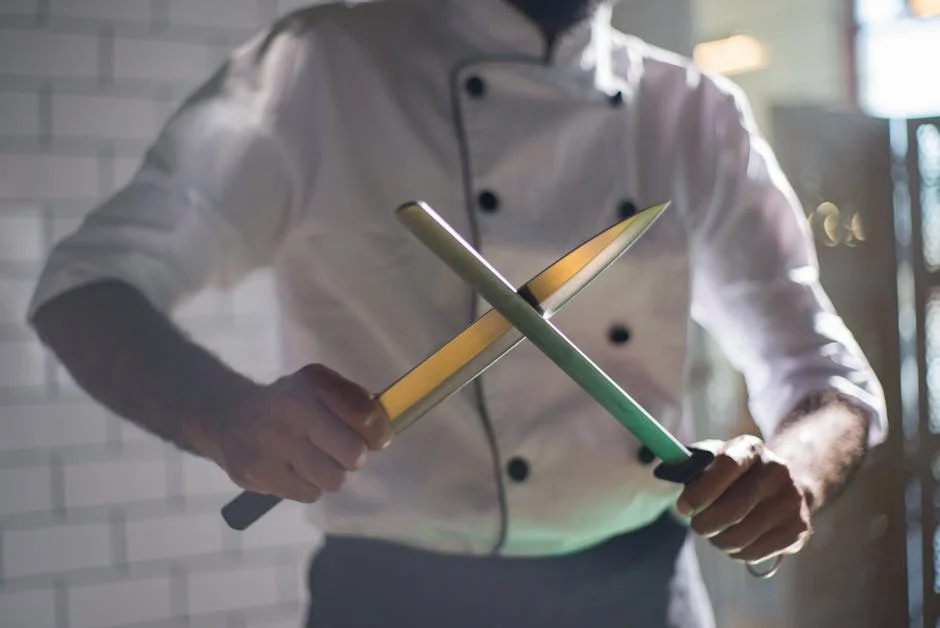
A dull knife is more dangerous than a sharp one because you compensate with pressure. Most hunters don’t sharpen often enough. The test is simple: draw the blade lightly across your thumbnail. If it skates, it needs a stone. If it catches, it’s ready to work. A ceramic rod or diamond pocket sharpener in your pack handles touch-ups in the field; a whetstone handles proper edge restoration at home.
The 420HC steel in the Buck knives responds well to a ceramic rod and doesn’t require the aggressive reprofiling that some harder steels need. Damascus steel, depending on the base alloy, may need a different approach — consult the maker’s guidance before using an aggressive stone.
Frequently Asked Questions
What blade length is best for field dressing deer?
A five-to-six-inch blade is the practical standard for deer field dressing. It provides enough reach for body cavity work while staying controlled enough for the detail cuts near the diaphragm and sternum. The Buck Knives 119 Special at six inches has been the benchmark for this use case for decades. Longer blades are useful for elk and larger game, but they’re unnecessary for whitetail and mule deer.
Is the Buck 110 Folding Hunter a practical substitute for a fixed blade?
For light to moderate hunting use, yes — the lockback mechanism is secure and the 420HC blade holds a working edge. The limitation is mechanical: a folder introduces a pivot point that a fixed blade doesn’t have, and under hard lateral stress the lock is the weak point. For dedicated field dressing and camp cutting tasks, a fixed blade like the Buck 119 is the more reliable choice.
Does Damascus steel actually perform better than production steel?
It depends on the base alloy and the maker’s heat treatment — not the Damascus pattern itself. Quality hand-forged Damascus from a skilled maker, using a sound base steel, holds an edge well and has genuine aesthetic value. The BIGCAT ROAR Predator Hunter uses patented Damascus construction, but without knowing the specific steel composition, performance is harder to guarantee than with a known production alloy like 420HC.
What’s the advantage of a full tang over a partial tang for hunting use?
Full tang means the steel runs the entire length of the handle with no joint or epoxy bond between blade and grip material. Under the lateral stress of hard chopping, joint work, or batoning, a partial tang can fail where a full tang won’t. The Buck 119 uses full tang construction specifically because it was designed to handle field conditions that would stress a lighter build.
How do I maintain a fixed blade hunting knife in the field?
Dry the blade after use, especially after contact with blood or moisture. A light coat of mineral oil or a dedicated blade oil applied before storage prevents rust on stainless steel and is essential on carbon or Damascus blades. Carry a ceramic rod or small diamond sharpener for touch-ups in camp — draw the blade lightly across your thumbnail to check whether the edge catches or skates before each use.
Where to Buy
Gerber Gear Ultimate Survival Knife, Fixed Blade Knife with Combo Edge, includes Fire Starter Edge and Ferro Rod,See Gerber Gear Ultimate Survival Knife, … on Amazon