
Fiskars Chopping Axe Review: Three Models Tested

Affiliate disclosure: Some links on this page are affiliate links. If you buy through them we earn a small commission at no extra cost to you. This never influences which products we recommend — we only suggest things we'd buy ourselves. Product prices and availability are accurate as of the date published and are subject to change. Always check Amazon for current pricing before purchasing. Learn more.

Ultra-sharp blade designed specifically for kindling preparation
See Fiskars 28" Chopping Axe, Ultra-Sharp… on AmazonChopping kindling and splitting firewood are not the same task, and the axe you reach for should reflect that. Fiskars makes several options in this category, each sized for a different job and a different hand. I’ve used Fiskars axes in the GW and on weekend trips into the Alleghenies long enough to have opinions worth sharing.
Knowing which axe fits your work starts with understanding what axes are actually designed to do at each length and weight class. The three Fiskars options here — a 14-inch hatchet, a 23.5-inch splitting axe, and a 28-inch chopping axe — cover distinct ground. None of them is the wrong tool if you match the right one to your situation.

What to Look For in a Fiskars Chopping Axe
Handle Length and Leverage
Handle length is the first variable that matters. A longer handle generates more swing arc and delivers more force at the bit — useful for splitting rounds or bucking larger wood. A shorter handle gives you control in tight spots and reduces the energy cost per swing when you’re working through a pile of kindling sticks. Fiskars designs each model with a specific length for a reason. The 14-inch hatchet is a wrist-and-forearm tool. The 28-inch axe works from the shoulder.
The wrong length doesn’t just feel awkward — it tires you out faster. I’ve watched people use a full-length axe on small kindling and miss half their strikes because the tool outpaces their control. Match the handle length to the scale of wood you’re processing, not to what looks impressive on a gear shelf.
Blade Geometry and Grind
Fiskars uses a convex grind across most of their axe line. That geometry is built for splitting — it wedges into wood fibers and pushes them apart rather than slicing through cleanly. For kindling and chopping softwood, that works well. For fine carving or notch work, it’s less suitable. These are yard and camp axes, not carving tools, and the grind reflects that.
The blade steel on Fiskars axes is hardened to hold an edge through heavy use. It won’t match a hand-forged Scandinavian axe in edge retention, but it’s significantly more durable than cheaper alternatives in the mid-range category. Touching up the edge with a puck or diamond file every few sessions keeps it working properly.
Weight Balance and Fatigue
Fiskars designs their axes with weight balance as a stated engineering goal, and it shows in use. A head-heavy axe punishes you after thirty minutes of continuous splitting. A well-balanced axe lets the swing do the work. This matters more on longer sessions than shorter ones — if you’re processing a cord of wood versus splitting enough kindling for a weekend fire, the balance difference becomes significant.
Balance also affects accuracy. A balanced axe tracks more predictably through the swing arc. For newer users especially, this reduces the tendency to skew the strike and glance off the wood. Exploring the full range of bushcraft axes and handling them before committing to one is worth the time when balance is a priority.
Sheath and Storage
A sheath is not optional. An unsheathed axe blade in a pack or a truck bed is a hazard and a way to wreck other gear. The X7 hatchet ships with a sheath. The larger models do as well. Check the sheath retention — it should clip or snap securely and not release from a bump or drop. Fiskars sheaths are plastic and functional rather than beautiful, but they hold.
Top Picks
Fiskars 28” Chopping Axe
The Fiskars 28” Chopping Axe is designed specifically around kindling preparation — and that specificity is what makes it worth considering. Most axes at this length are built for splitting larger rounds. This one is ground for cleaner chopping strokes through smaller diameter wood, which changes how it performs in daily camp use.
I’ve used the 28-inch at the woodpile behind the cabin over enough seasons to say the weight balance holds up in practice, not just on paper. The swing arc is long, which generates force without requiring you to muscle through every stroke. Fatigue comes later in a session with this axe than with shorter, head-heavy options I’ve run alongside it.
The tradeoff is control. Twenty-eight inches of handle requires deliberate technique. Shorter users or anyone still developing their swing mechanics will find it harder to place the strike accurately on small pieces. If you’re comfortable with a full-length axe and your primary task is kindling from larger splits, this is a capable tool. If you’re newer to axe work, start shorter.
Check current price on Amazon.
Fiskars X15 Splitting Axe
The Fiskars X15 sits at 23.5 inches — shorter than the 28-inch chopping axe, longer than the X7 hatchet — and that middle position gives it genuine versatility. I’ve run the X15 on splitting sessions, limbing, and cutting branch wood down to campfire length. It handles all three reasonably well, which is more than most single-length axes can claim.
The shock-absorbing handle is a real feature, not marketing language. Fiskars builds a polymer core that absorbs vibration on mis-strikes and off-center hits. After an hour of continuous splitting, the difference in hand fatigue is noticeable. The handle is also rated to survive contact with the wood — a struck handle on the X15 won’t crack the way a wooden-handled axe will.
The limitation is the same one that affects any mid-length axe: it’s a compromise. It won’t deliver the force of the 28-inch on large rounds, and it’s heavier and less nimble than the X7 for pack carry. For a basecamp axe or a truck-camping tool where you need one axe to handle varied tasks, the X15 earns its place. For a dedicated kindling axe or a trail-carry hatchet, the other two options are more purpose-fit.
Check current price on Amazon.
Fiskars X7 Small 14” Hatchet
The Fiskars X7 is the axe I actually keep in my pack. Fourteen inches and light enough to carry without noticing it. I’ve had mine into the GW more times than I can count — it processes kindling, splits small rounds for a fire lay, and handles light limbing without complaint.
The X7’s strength is precision. At 14 inches, you’re working close to the wood. Strikes are easy to place, and you don’t need a long swing to generate enough force for small-diameter splits. For bushcraft use — where your wood is often found rather than pre-cut, and where pack weight matters — this is the most practical of the three.
The honest limitation: it’s a hatchet. It is not a felling axe, not a heavy splitting tool, and not the right answer if you’re processing large rounds at a base camp. Mors Kochanski writes about matching tool size to task consistently, and this is exactly that principle applied. The X7 does small work well. For large work, you need a larger tool. The included sheath fits securely and the plastic retention holds through pack movement.
Check current price on Amazon.

Buying Guide
Matching Axe Length to Your Use Case
The single most important decision is length, because length determines what the axe can reasonably do. A 14-inch hatchet is a camp and trail tool — it processes kindling, splits small pieces, and packs light. A 23, 28-inch axe is a woodyard or basecamp tool that handles larger splits and sustained work sessions. Buying a longer axe for trail carry, or a hatchet for heavy splitting, produces frustration in both directions.
Think through your most common use before buying. If you’re splitting firewood at home or processing wood at a drive-in basecamp, the longer axes are appropriate. If you’re carrying everything on your back into the GW for three days, the X7 is the right answer.
Polymer vs. Wood Handles
Fiskars axes use polymer handles throughout their line. The case for polymer is durability — a polymer handle survives a struck handle (hitting the wood with the handle rather than the bit) without cracking or splitting. A wooden handle does not. Polymer also requires no maintenance: no linseed oil, no checking for loose heads, no swelling or shrinking with seasonal humidity changes.
The case against polymer is feel and repairability. A wooden handle can be replaced in the field with materials you can find. A broken polymer handle means the axe is done until you get home. For extended wilderness use far from resupply, that matters. For most weekend and camp use, it does not.
Single-Bit vs. Purpose-Ground Geometry
All three of these axes are single-bit designs, but the blade geometry differs by purpose. The 28-inch chopping axe is ground for kindling and clean chopping strokes. The X15 and X7 carry a geometry suited to splitting. If you’re cross-referencing options across the broader axe category, pay attention to how the manufacturer describes the grind — chopping geometry and splitting geometry produce different results on the same piece of wood.
For bushcraft and camp use, a splitting geometry works fine for most tasks. If you’re processing a lot of smaller kindling sticks from branch wood, a chopping geometry like the 28-inch is worth the consideration.
Edge Maintenance
A dull axe is both inefficient and dangerous. More force is required to make a dull axe work, which means more mis-strikes and glanced blows. Fiskars blades arrive sharp from the factory and hold that edge reasonably well through normal use. Touch them up with a puck sharpener or a diamond file every few sessions — ten strokes per side, bevel-matched, is enough to maintain working sharpness.
Don’t skip the sheath between sessions. Blade contact with metal, concrete, or gravel damages the edge faster than use does. Store the axe sheathed and the edge will last significantly longer between sharpenings.
When to Choose a Hatchet Over a Full Axe
The weight difference between a 14-inch hatchet and a 28-inch chopping axe is meaningful over distance. If you’re packing in on foot, every ounce compounds. A hatchet at half the weight handles 80 percent of the firewood tasks a full axe handles — the exception being large rounds that need real splitting force. For most bushcraft camp situations, where wood is gathered and processed in the 1, 3 inch diameter range, a hatchet is sufficient and the weight savings are real.
If you’re car camping or operating from a fixed basecamp with no carry weight concern, the larger axes earn their place. The X15 and 28-inch chopping axe produce less fatigue on sustained work than a hatchet does, because the longer handle and heavier head do more of the work per swing.

Frequently Asked Questions
What is the difference between a chopping axe and a splitting axe?
A chopping axe is ground for cutting across wood grain — the bit is thinner and the grind is designed to slice through fibers. A splitting axe is ground to drive along the grain and wedge wood apart, so the head is wider and more convex. The Fiskars 28” Chopping Axe is purpose-built for kindling and cross-grain work, while the Fiskars X15 is the better choice for splitting rounds along the grain.
Is the Fiskars X7 hatchet big enough for serious firewood processing?
For camp-scale firewood — kindling, small splits for a fire lay, branch wood under three inches in diameter — the Fiskars X7 handles the work without trouble. It is not the right tool for splitting large rounds or bucking substantial-diameter logs. If your firewood comes pre-cut in splits and you’re finishing them down to kindling, the X7 is sufficient. If you’re starting from large rounds, move up to the X15 or the 28-inch.
Which Fiskars axe is best for backpacking and trail carry?
The X7 at 14 inches is the only one of the three I’d carry in a pack. The X15 and the 28-inch chopping axe are basecamp and woodyard tools — they’re heavier and longer than a trail kit warrants. The X7 weighs enough less that you’ll actually bring it rather than leaving it behind to save weight. The included sheath keeps the blade protected in a pack.
How do Fiskars polymer handles compare to traditional wood handles in field conditions?
Polymer handles are more durable under hard use — they won’t crack from a missed strike the way wooden handles do, and they require no seasonal maintenance. The tradeoff is repairability: a broken wooden handle can be replaced with materials you can source in the woods, while a broken polymer handle retires the axe. For weekend and car camping use, polymer is the practical choice. For extended expeditions far from resupply, some experienced woodsmen still prefer wood.
How often do Fiskars axes need sharpening?
Under normal camp use, touching up the edge every few sessions is sufficient. Ten to fifteen strokes per side with a puck sharpener or diamond file, matched to the factory bevel angle, keeps the blade working well. The Fiskars steel holds an edge adequately through regular use. Storing the axe sheathed between sessions extends time between sharpenings significantly — blade contact with concrete, gravel, or other metal is what damages edges fastest.
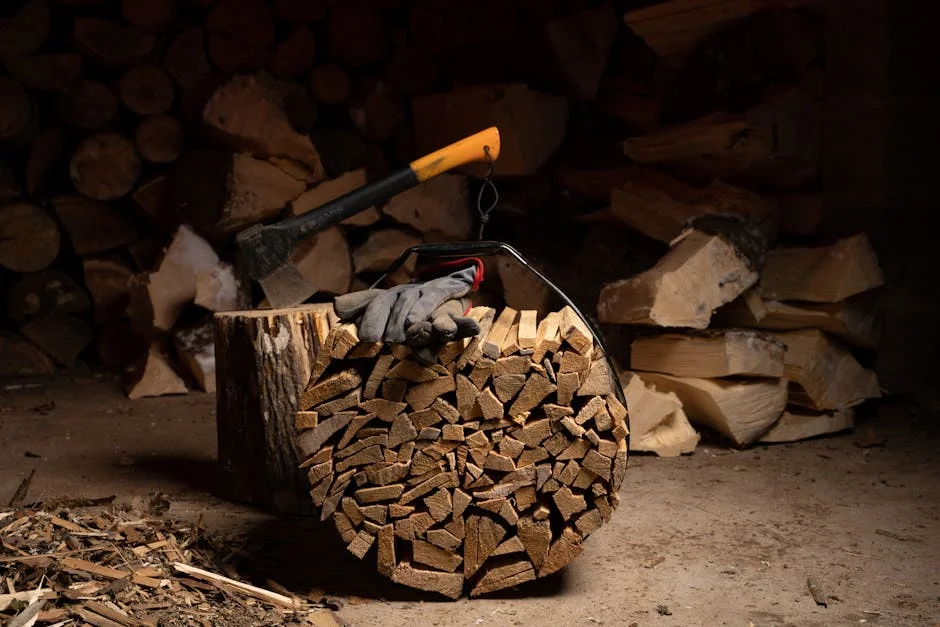
Fiskars 28" Chopping Axe, Ultra-Sharp Blade for Kindling with Ease, Weight Balanced, Garden and Outdoor Gear, 3.5: Pros & Cons
- Ultra-sharp blade designed specifically for kindling preparation
- 28-inch length provides extended reach and leverage
- Longer handle may be harder to control for shorter users
Where to Buy
Fiskars 28" Chopping Axe, Ultra-Sharp Blade for Kindling with Ease, Weight Balanced, Garden and Outdoor Gear, 3.5See Fiskars 28" Chopping Axe, Ultra-Sharp… on Amazon