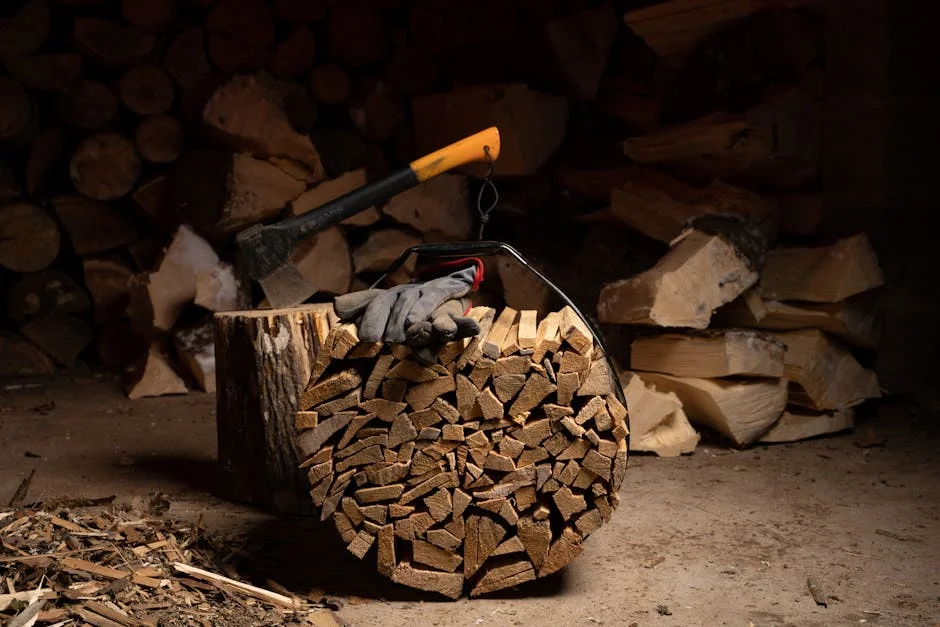
Axe to Split Wood: Choose the Right Tool for Your Needs

Affiliate disclosure: Some links on this page are affiliate links. If you buy through them we earn a small commission at no extra cost to you. This never influences which products we recommend — we only suggest things we'd buy ourselves. Product prices and availability are accurate as of the date published and are subject to change. Always check Amazon for current pricing before purchasing. Learn more.

Quick Picks
Fiskars X25 Splitting Axe, 28" Wood Splitting Axe for Medium to Large Size Logs with Shock Absorbing Handle and Sheath,
28-inch length provides extended reach for medium to large logs
Buy on AmazonFiskars 8 lb. Splitting Maul - 36" Shock-Absorbing, Comfort Grip Handle - Rust Resistant Forged Steel Blade - Wood
8 lb weight provides substantial striking force for wood splitting
Buy on AmazonChopping Axe,10”Camping Outdoor Hatchet for Wood Splitting and Kindling, Forged Carbon Steel Heat Treated Hand Maul
Forged carbon steel with heat treatment for durability
Buy on Amazon| Product | Price Range | Top Strength | Key Weakness | Buy |
|---|---|---|---|---|
| Fiskars X25 Splitting Axe, 28" Wood Splitting Axe for Medium to Large Size Logs with Shock Absorbing Handle and Sheath, best overall | $$ | 28-inch length provides extended reach for medium to large logs | Manual splitting requires significant physical strength and technique | Buy on Amazon |
| Fiskars 8 lb. Splitting Maul - 36" Shock-Absorbing, Comfort Grip Handle - Rust Resistant Forged Steel Blade - Wood also consider | $$ | 8 lb weight provides substantial striking force for wood splitting | Heavier maul requires more strength and stamina than lighter alternatives | Buy on Amazon |
| Chopping Axe,10”Camping Outdoor Hatchet for Wood Splitting and Kindling, Forged Carbon Steel Heat Treated Hand Maul also consider | $$ | Forged carbon steel with heat treatment for durability | Manual tool requires proper technique and physical effort | Buy on Amazon |
| Fiskars X27 Super Splitting Axe, 36" Wood Splitting Axe for Medium to Large Size Logs with Shock-Absorbing Handle, also consider | $$ | 36-inch length provides extended reach for splitting logs | Longer 36-inch length may be unwieldy for smaller users | Buy on Amazon |
| Professional Hatchet, 14" Wood Axe, Wood Splitter, Outdoor Camp Chopping Axe for Splitting and Kindling, Forged Steel also consider | $$ | Forged steel construction suggests durability and traditional quality | Unknown brand limits assurance of quality control and warranty support | Buy on Amazon |
Splitting firewood well comes down to having the right tool for the log in front of you. A hatchet that handles kindling at camp won’t do much against a round of seasoned oak, and a heavy maul is overkill — and exhausting — when you’re just topping off the woodpile on a Saturday morning. Knowing which axes fit which jobs makes the difference between an hour of productive splitting and a frustrating afternoon of glancing blows.
The five tools here cover that range: compact camp hatchets, mid-weight splitting axes, and a full maul for serious volume. What separates a good choice from a poor one has less to do with price and more to do with matching head weight, handle length, and geometry to your actual use case.

What to Look For in an Axe to Split Wood
Head Weight and Geometry
Splitting axes and mauls don’t cut through wood the way a felling axe does. They work by driving a wedge-shaped head into the grain and forcing the fibers apart. That means the head geometry matters as much as the weight. A wide, convex bevel — sometimes called a splitter’s grind — is designed to push the wood apart as the head descends. A thinner, more acute bevel will bite into the grain and stick rather than split.
Head weight determines how much kinetic energy you deliver per swing. Lighter heads (under 3 lbs) suit kindling and small-diameter rounds. Midweight heads (3, 5 lbs) are workhorses for standard firewood — 6- to 10-inch rounds. Heavier heads (6, 8 lbs) generate the force needed to split large, knotty rounds but demand more from you physically. Match the head weight to the wood you’re actually dealing with, not the wood you imagine you’ll be dealing with.
Handle Length and Swing Arc
Handle length determines your swing arc, and swing arc determines how much speed — and therefore force — you can put into the head at impact. A 28-inch handle produces a shorter, more controlled arc suited to mid-size rounds and users who split in tighter spaces. A 36-inch handle generates more velocity on a full swing, which translates directly to splitting force, but it requires room to swing and enough upper-body endurance to sustain the motion through a long session.
For camp use, shorter handles win on portability and control. For a woodpile at the house, longer handles reduce back strain because you’re working at a more natural height rather than stooping over the chopping block.
Handle Material
Wood handles are traditional and absorb vibration well when the fit is tight, but they can loosen, crack, or break under hard use if not maintained. Fiberglass and composite handles don’t swell or shrink with moisture changes, which matters in wet seasons. Shock-absorbing composite designs — like the ones Fiskars uses — reduce the sting transmitted to your hands and wrists over a long splitting session. That’s not a comfort luxury; it’s a fatigue factor that determines how long you can work before you start missing your marks.
Sheath and Storage
A splitting tool without a sheath is a liability sitting in the truck bed or leaning against the barn wall. Edge protection matters for safety but also for tool longevity — a nicked or burred edge splits less cleanly and requires more dressing to restore. Most purpose-built splitting axes include a sheath; compact hatchets often don’t. Check before you buy, especially if you’re packing the tool rather than leaving it at a fixed location.
Exploring the full range of splitting and camp axes before settling on a size is worth the time — the right choice depends on where you’re splitting, how much volume you’re moving, and who else might be using the tool.
Top Picks
Fiskars X27 Super Splitting Axe, 36”
The Fiskars X27 Super Splitting Axe is the best all-around choice for anyone splitting firewood at a fixed location. The 36-inch composite handle gives you a full swing arc, and the weight-forward head geometry does most of the work once you’ve established a consistent stroke. I’ve used an X27 at my place in Lexington for three seasons, and it handles everything from dry locust to fresh-cut red oak without much complaint.
The shock-absorbing handle is worth mentioning beyond the marketing language. After an hour of splitting, the difference between a dampened composite handle and an older wood-handle axe shows up in your forearms. You can stay at it longer and keep your form tighter, which means fewer glancing blows that jar your wrists and waste energy.
The 36-inch length is a real consideration if you’re shorter or splitting in a confined area. The full arc requires space and a solid chopping block at the right height. For tall users splitting at home, this is the tool I’d recommend first.
Check current price on Amazon.
Fiskars X25 Splitting Axe, 28”
The Fiskars X25 Splitting Axe is the shorter sibling to the X27, and for a meaningful segment of buyers it’s the better fit. Twenty-eight inches is enough handle for controlled, powerful splits on medium-size rounds — 6 to 10 inches in diameter — without demanding the full swing arc of the 36-inch version. If your splitting space is limited, or if you’re on the shorter side of average height, the X25 gives you most of the X27’s capability in a more manageable package.
The head geometry is the same as the X27: wide convex bevel, weight forward, designed to push grain apart rather than bite and stick. The trade-off is pure kinetic energy — a shorter arc means less velocity at impact, so dense or knotty rounds take more swings. For seasoned hardwood split to a manageable size, that’s not a significant problem. For fresh-cut, large-diameter rounds, you’ll feel the difference.
Check current price on Amazon.
Fiskars 8 lb. Splitting Maul, 36”
A maul is a different tool with a different job. The Fiskars 8 lb. Splitting Maul isn’t for general firewood duty — it’s for the rounds that defeat a standard splitting axe. Knotty sections, large-diameter pieces, fresh-cut green wood that doesn’t want to cooperate: those are maul territory. Eight pounds is substantial, and the 36-inch handle means you’re committing to a full, deliberate swing on every stroke. This is not a fast tool.
What makes the Fiskars maul worth considering over a traditional wood-handled steel maul is the same thing that distinguishes the X27 and X25: the composite handle manages vibration and doesn’t require the maintenance that a wooden handle demands. The rust-resistant forged steel blade holds up to outdoor storage without the surface care a plain steel head needs.
Use this if you process significant volume, deal with large rounds regularly, or are working through a pile of gnarly wood that shorter axes struggle with. It is too heavy and too long for camp use or casual splitting. For occasional splitting of normal-size firewood, the X27 is a more practical daily tool.
Check current price on Amazon.
Professional Hatchet, 14” Wood Axe
The Professional Hatchet, 14” Wood Axe occupies useful middle ground between a camp hatchet and a full splitting axe. Fourteen inches is long enough to generate useful splitting force on small to medium rounds while staying compact enough to pack into a camp kit without much sacrifice. The forged steel construction is solid for a tool at this size, and the multi-purpose design — splitting, chopping, and general camp tasks — suits weekend trips where you’re not going to carry three separate tools.
I haven’t used this one personally. The brand is not one I know from the field, and that matters for a tool you’re swinging hard and relying on to hold together. The forged construction is a positive signal, but unknown-brand axes warrant more scrutiny on fit between head and handle, edge finish, and heat treatment quality. Inspect those details carefully if you buy.
For camp splits and kindling production at a fixed site, this is a reasonable mid-size option. I’d reach for the Mora-handled Gransfors or a Council Tool hatchet before this, but those are outside this roundup.
Check current price on Amazon.
Chopping Axe, 10” Camping Outdoor Hatchet
The Chopping Axe, 10” Camping Outdoor Hatchet is the smallest tool in this group and the right choice when weight and pack space are the primary constraints. Ten inches of handle won’t split a 12-inch round of oak — it’s not built for that and shouldn’t be expected to. What it will do is process kindling efficiently, split small rounds of dry softwood at camp, and handle the general-purpose chopping tasks that come up on an overnight.
The forged carbon steel with heat treatment is a positive spec at this size class, where some budget tools cut corners on metallurgy. I haven’t used this particular brand in the field, so I’d treat it the way I’d treat any unfamiliar tool: check the head-to-handle fit before you swing it hard, and don’t rely on it for anything beyond light splitting and kindling until you’ve put some hours on it. For its intended role — camp hatchet — it checks the right boxes on paper.
Check current price on Amazon.

Buying Guide
Matching Tool Size to Your Wood Volume
The single most useful question to ask before buying is how much wood you’re actually splitting and in what form. A cord of hardwood rounds cut to 18 inches calls for a 36-inch splitting axe or maul. An occasional bag of campsite wood or a box of kindling calls for a camp hatchet. Buying the wrong end of that range is a common mistake — people buy heavy mauls thinking more weight means better performance, then find them exhausting to use for the 20-minute splitting sessions that are actually most common.
Volume matters too. If you’re splitting wood for a weekend fire two or three times a year, a mid-weight axe handles everything you’ll encounter. If you’re heating a house with wood, the heavier maul becomes the right answer for large rounds, with a splitting axe for daily maintenance splitting.
Handle Length and Your Physical Situation
Handle length is not one-size-fits-all, and the standard advice to “get the longest handle you can swing” misses an important qualifier: you have to be able to swing it accurately and repeatedly. A 36-inch handle generates more force, but if your height or the height of your chopping block means you’re compensating on every stroke, you’ll fatigue faster and increase the risk of a glancing blow.
Shorter users, people splitting in low-clearance sheds, and anyone who splits in shorter sessions are often better served by a 28-inch handle. Taller users splitting outdoors on a full-size block get the full benefit from 36 inches. Try the length before committing if you can, or check manufacturer specifications on where the grip sits at full extension.
Wood Species and Moisture Content
Dry, seasoned softwood — pine, fir, cedar — splits easily with modest force. Dry hardwood — oak, hickory, locust — requires more. Green (freshly cut) wood of any species is harder to split because the moisture in the grain resists the wedge. Knotty wood, crotch sections, and rounds with interlocked grain are the hardest cases regardless of species. A maul is better suited to those than an axe.
Understanding what you’re splitting before you buy the tool means you’re not over-investing in an 8-pound maul for dry pine kindling, or under-equipping yourself with a camp hatchet for green red oak. The full range of splitting and chopping axes covers both ends; the key is honest assessment of your actual wood.
Composite vs. Traditional Wood Handles
Wood-handled axes have a long track record for a reason: they’re repairable, they absorb vibration at the point of contact, and they feel right to a lot of people who grew up splitting wood with them. The trade-off is maintenance — wood handles need to be kept from soaking and drying out repeatedly, head-to-handle fit needs periodic checking, and a cracked or broken handle has to be replaced rather than shrugged off.
Composite handles — the Fiskars design is the most widely available in this category — eliminate most of that maintenance. They don’t swell, check, or loosen. The shock absorption is built into the handle design. For most buyers who want a tool that works without upkeep, composite is the practical choice. For buyers who want a traditional tool they can maintain and repair indefinitely, a wood-handled axe from a quality manufacturer is worth seeking out separately.
Safety Basics That Affect Which Tool You Buy
A splitting axe demands a clear swing zone, a stable chopping block at the right height, and — especially with a maul — enough physical stamina to maintain form through the session. Tools that are too heavy for the user aren’t safer than lighter tools; they’re less safe, because fatigue leads to compromised swing mechanics.
Sheath quality matters if the tool travels. A blade without coverage in a truck bed or gear bag is a hazard. Check that any axe you’re considering includes a sheath or that aftermarket options exist before you buy.
Frequently Asked Questions
What is the difference between a splitting axe and a splitting maul?
A splitting axe has a lighter head, typically 3, 5 lbs, with a convex wedge geometry designed to drive through the grain of wood. A splitting maul uses a much heavier head — 6, 8 lbs — with an even wider bevel to force larger, denser rounds apart. Axes are faster and less fatiguing for standard firewood. Mauls like the [Fiskars 8 lb.
Is the Fiskars X25 or X27 better for home firewood splitting?
The X27’s 36-inch handle generates more force per swing and suits taller users with full-size chopping blocks and open splitting areas. The X25’s 28-inch handle offers better control in tighter spaces and works well for users who find the longer arc difficult to sustain. For most average-height adults splitting seasoned hardwood outdoors, the Fiskars X27 Super Splitting Axe is the better daily tool. Shorter users or those splitting in confined spaces should look at the Fiskars X25 first.
Can a camp hatchet handle firewood splitting at a campsite?
For kindling and small dry rounds under 5 inches in diameter, yes. A compact tool like the Chopping Axe, 10” Camping Outdoor Hatchet is purpose-built for that role and handles camp splitting efficiently when the wood is seasoned and manageable in size. For larger rounds or green wood, a camp hatchet is the wrong tool — you’ll exhaust yourself without results, and the head-to-handle stress on a small tool under those conditions is not trivial.
How much does handle length affect splitting performance?
Handle length directly determines swing arc, and swing arc determines the velocity — and therefore kinetic energy — delivered to the wood at impact. A 36-inch handle swung the same way as a 28-inch handle hits harder because the head travels a longer arc and reaches higher velocity. The practical limit is the user’s height, available swing space, and stamina. More handle length is only an advantage if you can use it with consistent form throughout your splitting session.
Do I need a sheath for a splitting axe?
If the tool travels with you or is stored where other people or gear can contact the edge, yes. A sheath protects the blade geometry as much as it protects people — a nicked or dinged edge requires dressing before it splits cleanly again. The Fiskars axes in this roundup include sheaths. The generic-brand hatchets may not include reliable edge protection, which is worth confirming before purchase.

Where to Buy
Fiskars X25 Splitting Axe, 28" Wood Splitting Axe for Medium to Large Size Logs with Shock Absorbing Handle and Sheath,See Fiskars X25 Splitting Axe, 28" Wood S… on Amazon